

Your Cart
The cart is empty
Last Updated: 1 September 2026
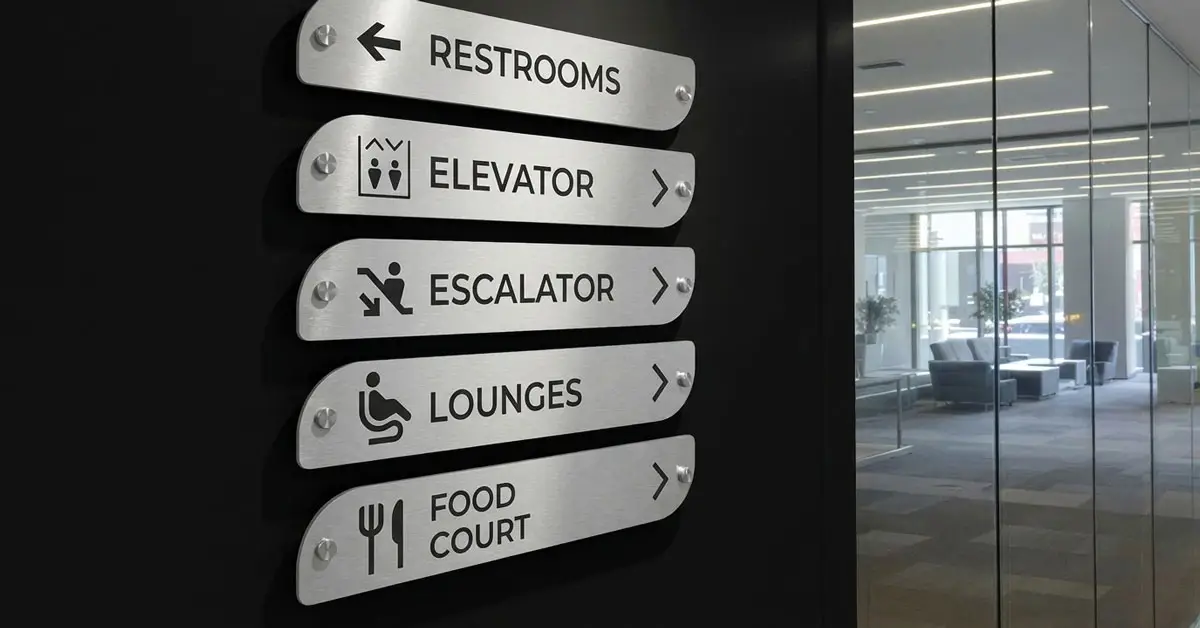
Directional signage is the silent guide that turns confusion into clarity. Whether you're managing a sprawling corporate campus, a busy retail center, or an industrial site, well-designed directional signs reduce visitor stress, improve safety, and reinforce your professional reputation. In South Africa's diverse commercial landscape, investing in quality directional signage is not just a convenience, it's a strategic imperative.
When visitors arrive at your property, their first experience often involves navigation. Poorly placed or confusing directional signs with arrows can create frustration, damage your brand perception, and even lead to safety incidents. This guide explores the art and science of creating effective directional signage that guides people with confidence and clarity.
Directional signage is a category of visual communication designed to guide people through physical spaces. Unlike identification signs (which tell you where you are) or regulatory signs (which communicate rules), directional signs focus on movement, helping visitors, employees, and delivery drivers navigate from one point to another efficiently.
Effective directional signage addresses the user experience as a complete journey. As industry standards emphasize, wayfinding should be "intuitive, accessible, and understandable," with consistency in sign content, layout, and program organization.
Creating effective directional signs requires more than placing an arrow on a board. Professional directional signage follows these core principles:
When a sign includes multiple lines of information, visual structure becomes essential. A clear hierarchy helps the viewer absorb key details quickly, especially in high-traffic areas where time and attention are limited. Bold typography should highlight the most important information, with supporting details placed in smaller sizes to create visual contrast.
For example, a directional sign directing visitors to a medical facility might place the facility name and suite number prominently, with supporting details like landmarks or cross-streets in a smaller font. This layered layout allows drivers to scan the sign quickly and retain the message without distraction.
Consistency in sign content, layout, and program organization is fundamental to effective directional signage. Every sign in your wayfinding system should adhere to a unified design language, consistent typography, color schemes, and arrow styles allow visitors to subconsciously identify directional signs as they move through a complex facility.
Visual continuity and order in signage helps visitors build a mental map of your property, reducing confusion and improving the overall experience.
One of the most important principles of directional signage design is reducing the number of decision points visitors face. The more choices a visitor must make, the higher the cognitive load and the greater the chance of confusion. Professional wayfinding systems strategically place directional signs at "decision points", locations where visitors naturally hesitate, while eliminating unnecessary signage that could create clutter.
As one signage expert notes, "Only ever give your guests two things to do on arrival. Don't bombard with multiple steps and processes as this will set the tone and put people on edge".
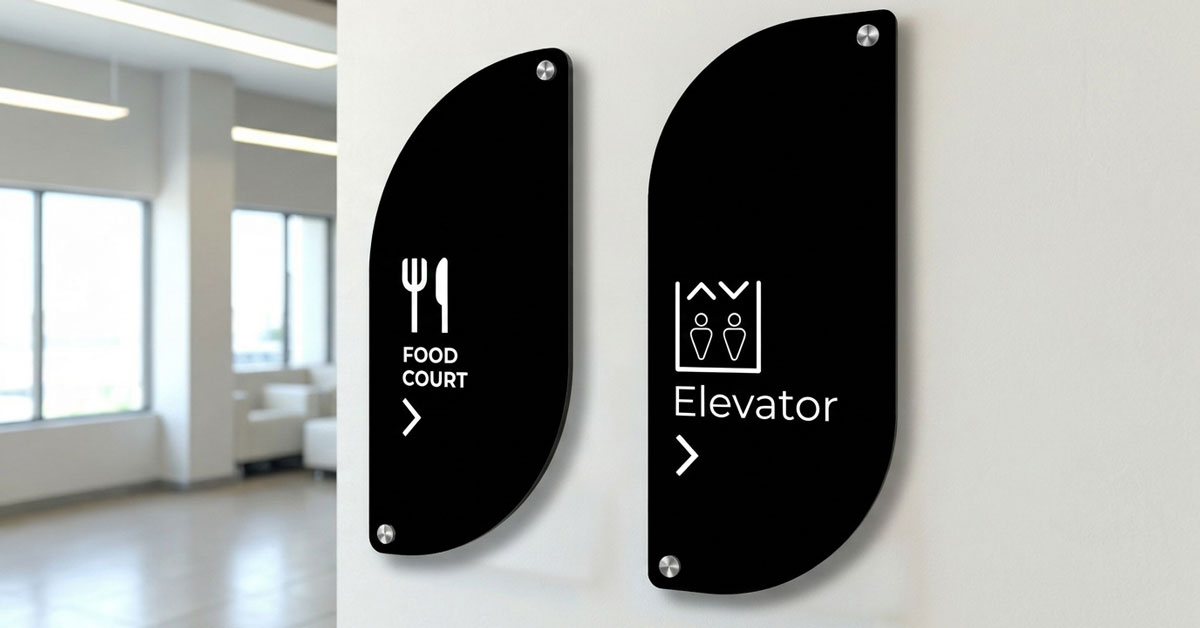
Directional signage can take many forms. The right sign type depends on location, visibility needs, and how much information must be conveyed. Here are the most common types:
Professional directional signage is a necessity across various sectors. Here are key applications in South Africa:
Corporate events, exhibitions, and conferences present unique navigational challenges. A handful of complaining guests who missed an important speaker due to obscure arrows and infrequent prompts can quickly taint an experience.
To ensure successful event navigation:
This authoritative section provides expert insights into the design and implementation of professional directional signage for modern South African properties.
What is the most important factor in directional sign placement?
The most useful directional signs must be installed at "decision points", locations where visitors naturally hesitate, such as entrance gates, corridor splits, or elevator lobbies. For maximum effectiveness in South African commercial office parks, these directional signs should be positioned at eye level (1,400mm to 1,600mm) to ensure immediate visibility before a wrong turn is made.
What is the difference between directional signs and wayfinding signs?
While the terms are often used interchangeably, directional signs specifically guide users toward a destination, whereas wayfinding is the broader system that includes directional, informational, identification, and regulatory signs. Directional signage is a critical component of any comprehensive wayfinding strategy.
Why are Engineered Composites (ACM) preferred for directional signs?
Aluminium Composite Material (ACM) is the gold standard for directional signage because it is lightweight, UV-stable, and entirely rust-proof. Unlike traditional Chromadek or solid steel, ACM provides a perfectly flat architectural finish that won't warp or pit, making it ideal for the high-humidity coastal climates of Cape Town and Durban. South African National Standards (SABS) recognize ACM as a preferred material for commercial directional signs.
Can directional signage be customized to match corporate branding?
Absolutely. While clarity is the priority, professional directional signage can be precision laser-cut into custom geometric profiles and finished in brand-specific matte or metallic coatings. Utilizing engineered composites allows for the integration of corporate logos and custom fonts without sacrificing the structural durability required for high-traffic environments. Professional directional signs can also reinforce brand identity and communicate professionalism.
Should directional signs include Braille for accessibility?
Yes, to maintain inclusivity and meet modern building standards, any directional signs mounted at hand-height within hallways or beside doors should feature tactile text and Braille for SANS 10400-S compliance. Industry standards emphasize "intuitive, accessible, and understandable wayfinding".
What font size is required for directional signs with arrows?
Font size is dictated by viewing distance; for standard indoor corridors, a minimum capital letter height of 50mm is recommended. For outdoor directional signs with arrows intended for vehicle navigation, high-contrast color combinations and significantly larger typography are mandatory to ensure safety and legibility from a distance.
What are the best materials for outdoor directional signs in South Africa?
For outdoor applications, ACM (Aluminium Composite Material) is the premium choice due to its rust-proof, UV-stable, and lightweight properties. For more budget-sensitive projects, treated Chromadek steel may be suitable, though it lacks the longevity and flat finish of ACM directional signs. High-quality directional signage can last 20+ years with minimal maintenance.
How does directional signage improve business credibility?
Professional wayfinding enhances credibility by creating a seamless, stress-free visitor experience that reinforces your brand identity. When a visitor can navigate a property intuitively, it builds trust and confidence in the business. Businesses that invest in clean, clear directional signage show that they care about both function and presentation.
What are the four main types of wayfinding signage?
Wayfinding signage typically falls into four categories: directional, informational, identification, and regulatory signs. Directional signs guide users toward their destination, while informational signs provide details about a space like maps. Identification signs confirm specific locations, such as room names, and regulatory signs communicate essential safety rules and legal compliance information for the facility.
Can directional signage help with traffic flow?
Well-placed directional signage significantly influences traffic patterns by encouraging the use of specific, efficient routes. This prevents congestion in high-traffic areas, reduces the risk of accidents, and improves the overall flow of vehicles and pedestrians. By guiding drivers and visitors along the best paths, businesses can ensure property efficiency even during peak operating times.
Every commercial development has unique navigational requirements. Whether you need a single directional sign with arrows or a comprehensive wayfinding schedule for a new build, we provide tailored, durable solutions engineered for the South African climate. Our directional signs are designed to withstand the harsh South African sun and deliver decades of reliable service.
Don't allow poor wayfinding to compromise your property's professional standards. We serve commercial properties across Johannesburg, Cape Town, Durban, and nationwide.
Contact us today to get a quote for your custom architectural signage requirements.